
By Antony Melville
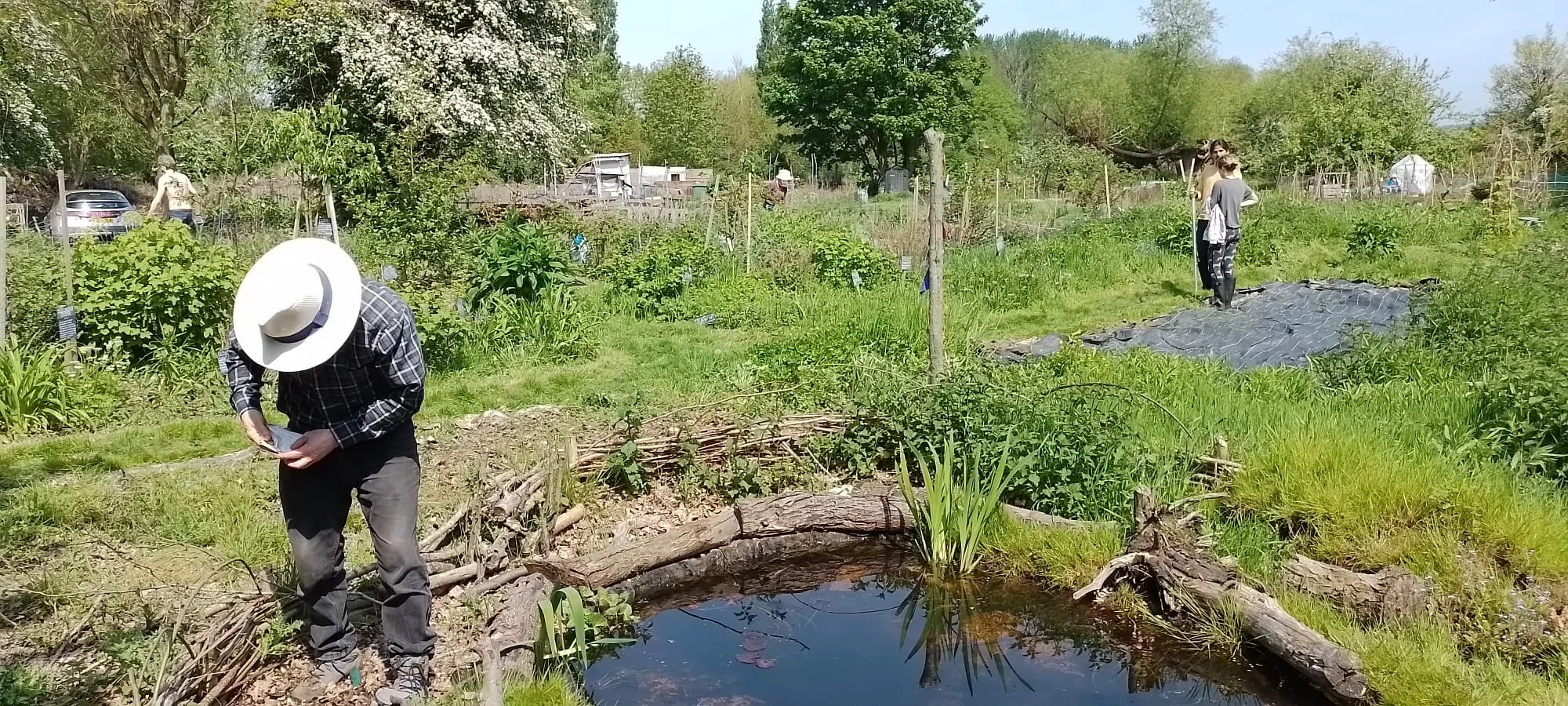
Marston Forest Garden in May, with trees, shrubs, ground cover and people all playing their part
Marston Forest Garden was conceived in June 2019 by a group of dreamers around a table in Jericho. The first cut into the nettles and willow herb came a month later. Then followed a lot of planning, sourcing, clearing, cardboard and woodchip before the first trees and bushes were planted in January 2020. Then COVID arrived and we found ourselves sustained through it by cossetting our ‘baby’ and watching the garden begin to establish itself.
Seven years on, it has survived hard frosts, extreme heat, drought and some very wet winters. Some plants have flourished, some have failed, and the garden continues to surprise us.
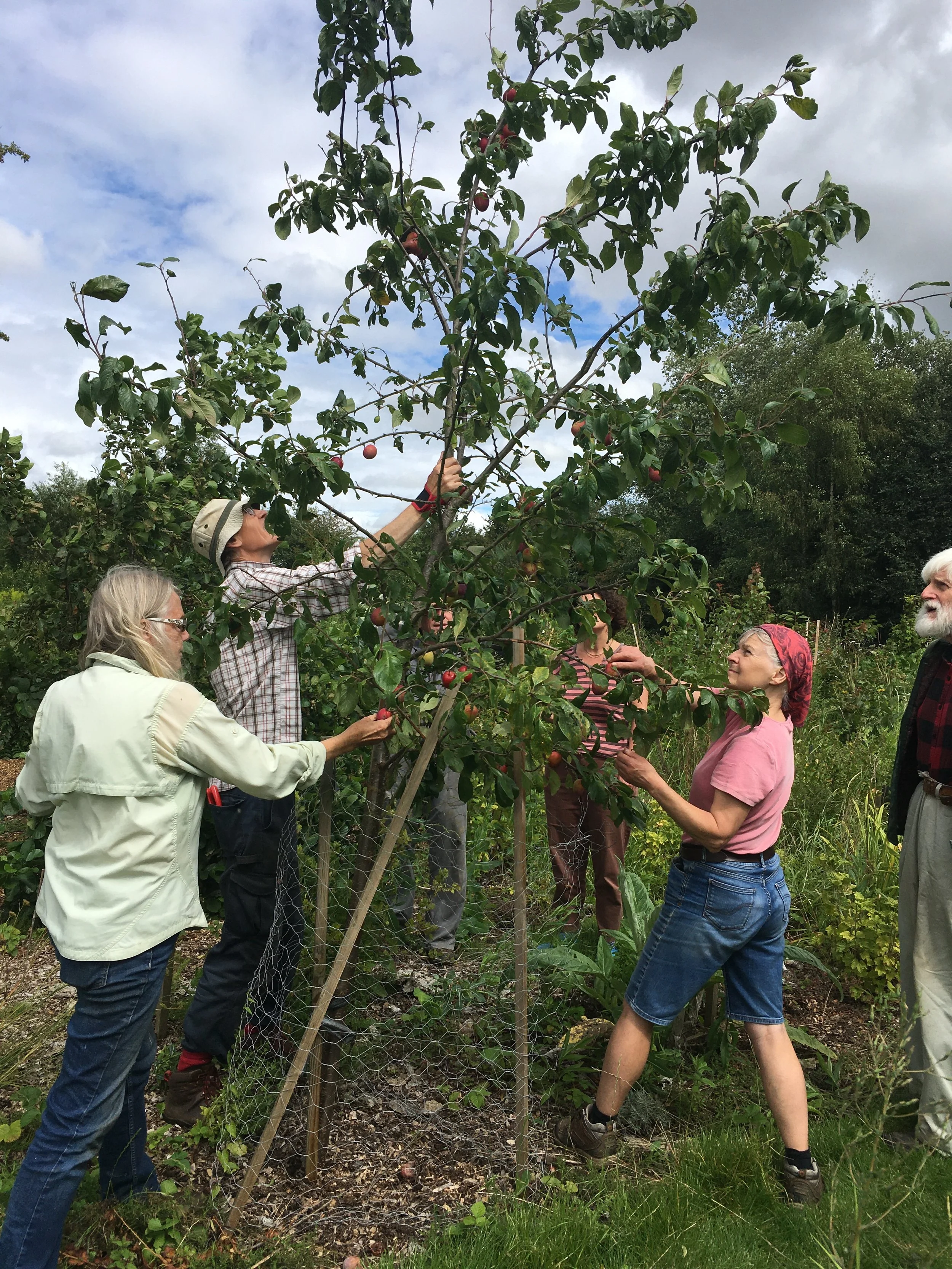
Harvesting some of the forest garden’s first plums in 2023
Seven years of weather, successes and failures
The weather has repeatedly tested the garden. In the winter of 2022, temperatures fell to around -8°C for a week, but even the apricot survived. That was followed by drought and days above 38°C - a precursor to the record-breaking dry summer of 2026 we have just gone through. But plants we thought we had lost revived when the September rain came.
Last year was a bumper year for fruit, with apricots and almonds in profusion along with pears, quinces and medlars. But this year has been different. March brought bitter north winds which blew off the blossom and kept the pollinators grounded, so we have had very little. April frost caught the promising walnut flowers too, and this summer’s dry weather has brought another test. The currants have been sitting on the bushes as tough, dry berries, although recent rain may yet help them.
One of the clearest lessons has been that some plants like where they are far more than others. We have lost the fig twice because the ground is simply too wet in winter. One plum probably had too much competition from the big oak for water. The almonds, meanwhile, have shot up and become our tallest trees, perhaps searching for light beside that same oak.
A forest garden teaches patience. What looks like a failure one year may recover the next, while something that thrived last season can struggle this time round.
A little wild around the edges
Is the garden as “overgrown” as it looks?
The grassy ground cover may look invasive while it is long, but if we pull it back we find a sea of mint (six varieties), sage, oregano, strawberries, and some good patches of raspberries.
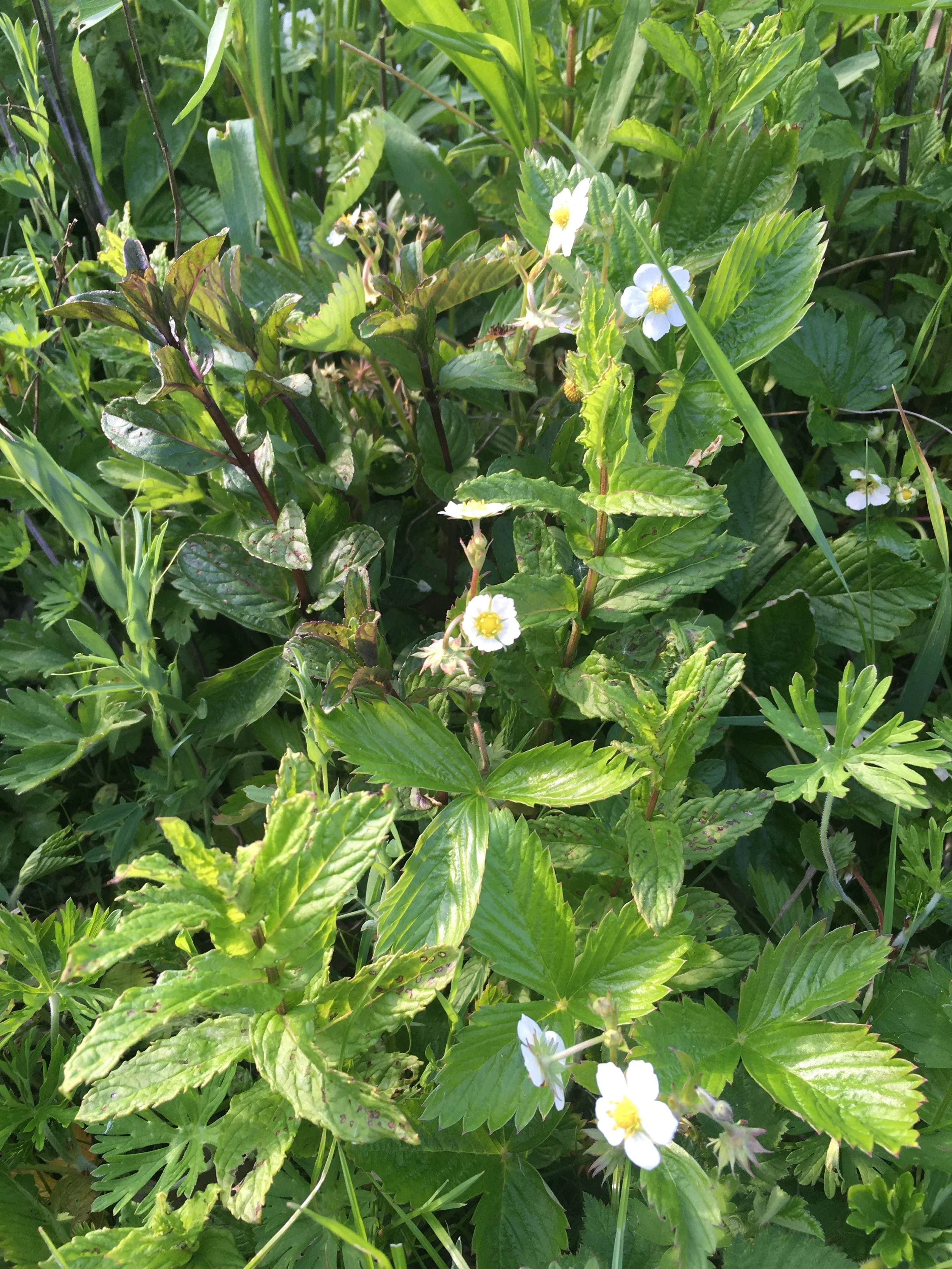
Look beneath the long grass and vigorous growth and there are useful plants everywhere, including strawberries
We have done quite well controlling the brambles through the winter, and at the last session with volunteers from Good Gym we dealt with some of the more vigorous plants, like hogweed and valerian. The aim is not to make the garden conventionally tidy. We keep back the plants that would otherwise take over, while allowing plenty of others to find their own place.
Comfrey is almost a category of its own, providing mulch and liquid fertiliser, bringing up rich minerals from its deep roots.
There are plenty of smaller successes too. The vine gives us small grapes and vine leaves to stuff. The loganberry along the wobbly fence gave copious fruit last year. The raspberries wander around and need persuading into good places.
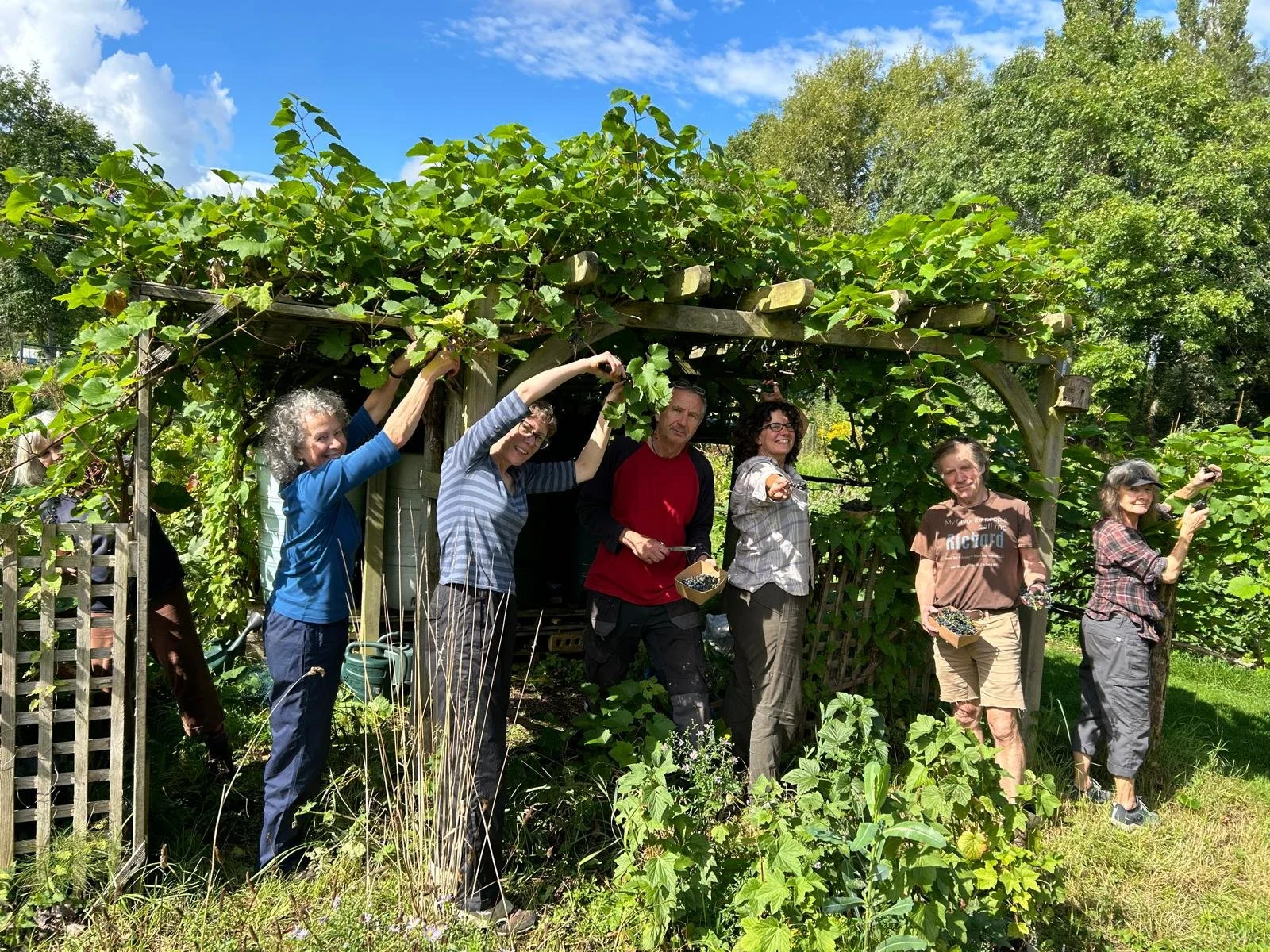
Volunteers gather beneath the vigorous vine, which produces both grapes and leaves for cooking
After seven years, these individual plants matter less than the way the whole garden is beginning to work together.
A growing community
The seven layers of the forest garden are talking to each other and settling in as a community. Some do better one year, others the next. And we humans can be part of it too, provided we do not try to take complete control.
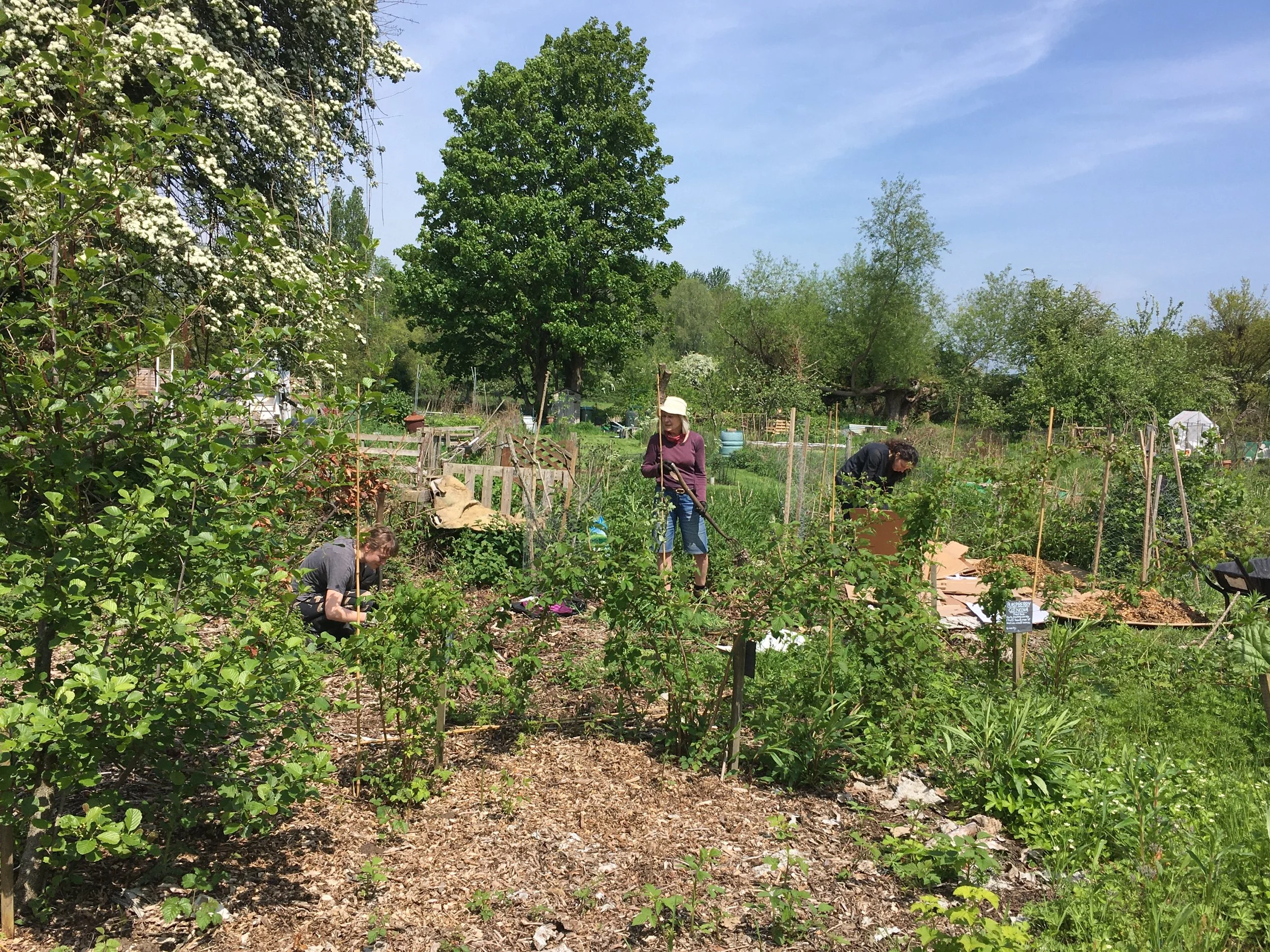
Volunteers tending the forest garden together during a May work party
We keep back the grass, brambles and a few other vigorous plants, then give space to the other inhabitants arriving: beetles, worms, bees, flies, birds and all those we do not see.
Perhaps conducting the orchestra are the mycelial networks of fungi running through the soil we largely leave alone. Will the fungal layer offer us fruit from time to time?
The other day I was walking through the garden in the evening when there, on the edge of the path, was a young male sparrowhawk. He sat and watched me watching him for half a minute before taking flight.
I think he checked us out and liked what he saw.
