
Planting a tree is an investment in the future and a lovely way to bring more life to a garden or shared green space. It can provide blossom, fruit, shelter for wildlife and shade for people — with benefits that grow over the years.
Giving it a good start takes a little preparation, especially below ground. This guide explains how to plant a pot-grown tree, care for its roots and keep it watered while it settles in.

Marston Community Growing Tree Planting event at Oxsrad Community Copse, January 2022.
When and where is the best time to plant a tree?
Autumn and winter are good times to plant trees in the UK, provided the soil isn’t frozen or waterlogged. Cooler conditions make it easier to keep the roots moist while the tree establishes.
Spring and summer planting will need closer attention to watering.
Before choosing your spot, check the tree’s eventual height and spread, and its preferred soil and sunlight conditions. Allow room for branches to develop and consider nearby buildings, paths, underground services and overhead wires.
What you need to plant a tree
Gather your tools before starting:
A spade and gardening gloves
A watering can or hose
A tarpaulin or an old sheet for the excavated soil
Wood chips or chipped bark for mulch
Clean, sharp secateurs and a small hand fork, if root preparation is needed
A suitable stake and flexible tree tie, if the tree needs support.
Water the tree thoroughly while it is still in its container. When moving it, support the pot or root ball — the roots and compost around them. Avoid lifting or dragging it by the trunk.
How to plant the tree
Before digging, find the trunk flare. This is where the bottom of the trunk widens, and the first main roots spread out.
Sometimes it is hidden beneath compost. Gently brush away the surface compost near the trunk until you can see where those roots begin. On a young tree, the widening may be subtle.
The trunk flare tells you the correct planting depth. Don’t assume the compost level in the pot is right: trees can arrive from a nursery planted too deeply.
When the tree is in the ground, the first flare of roots should be level with the surrounding soil. Burying the lower trunk can leave the bark vulnerable to decay and place the roots too deep.
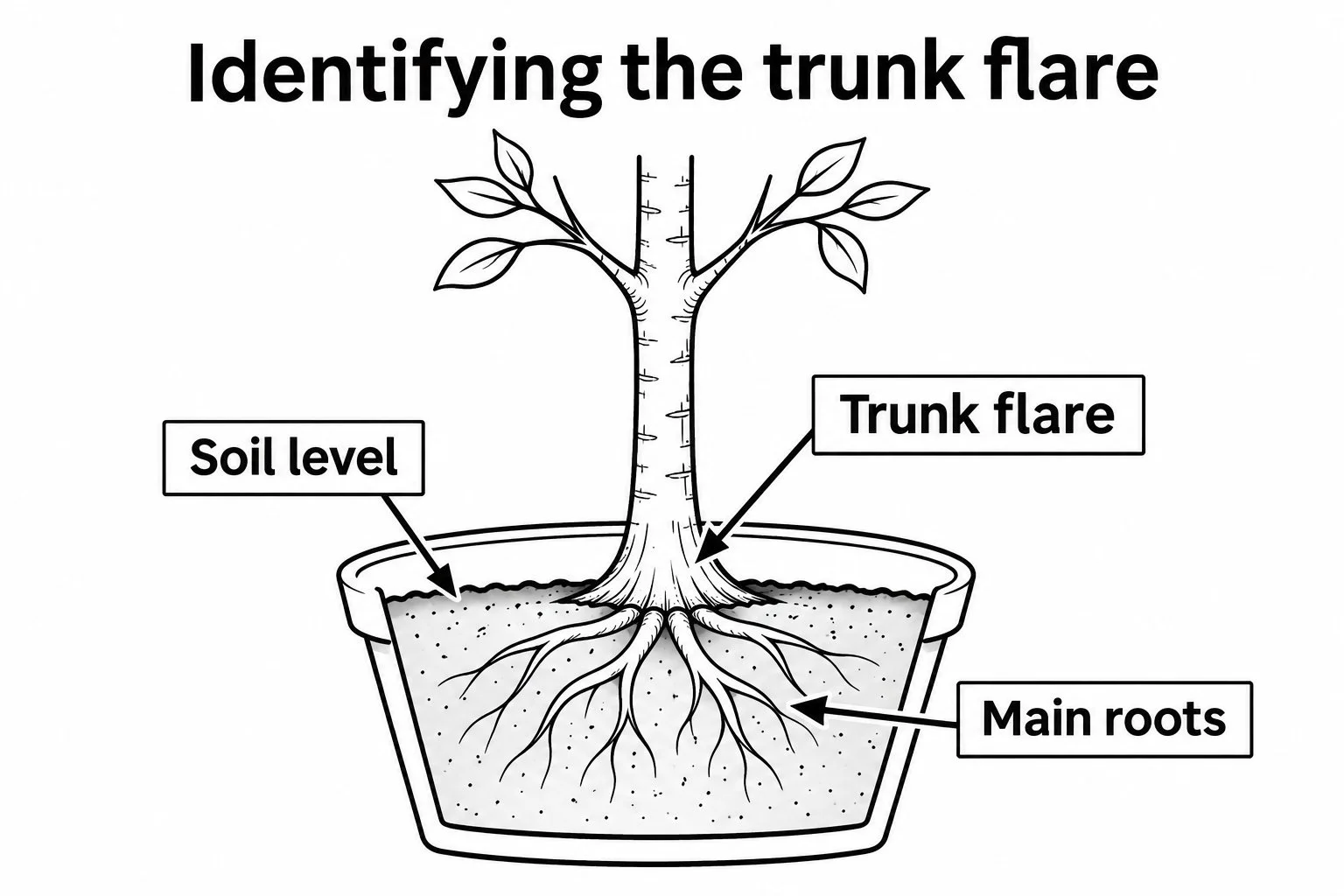
Find the trunk flare before deciding how deep to dig
Prepare the tree roots before planting
Carefully slide the tree out of its pot, supporting the root ball. Gently squeezing the sides of a flexible container can help if it is difficult to remove. Look at the sides and underneath. Roots that have spent a long time in a pot may be crowded together or growing in circles around the container.
Leave healthy roots largely undisturbed
If the roots aren’t congested, there is no need to pull the root ball apart or remove all the compost. Keep disturbance to a minimum.
Gently loosen tightly packed roots
If fine roots form a dense mat, gently tease the outer roots loose with your fingers or a small hand fork. The aim is to help them spread into the surrounding soil.
Preserve as many fine roots as possible. They are important for taking up water and nutrients.
Check for woody circling roots
Thicker roots that curl around the root ball need more attention. Some can eventually press against the trunk or other roots as they thicken, restricting healthy growth. These are sometimes called girdling roots.
Damaged or troublesome circling roots may need a clean cut with sharp secateurs. If several large roots are involved, or the root ball is severely congested, ask the nursery or an experienced gardener for advice before cutting.
Some trees, including magnolias and eucalyptus, are particularly sensitive to root disturbance.
Keep roots moist throughout planting, and avoid leaving them exposed to sunshine or drying wind.
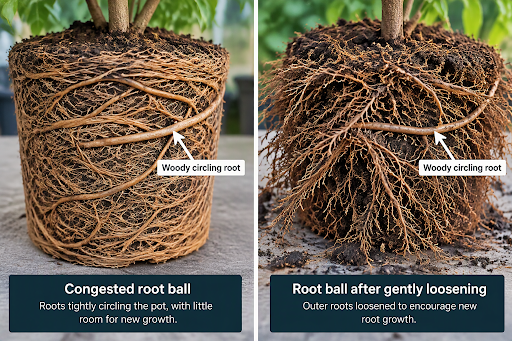
Loosen congested roots, while keeping the root ball largely intact. (Image: Microsoft Copilot, November 2026.)
How wide and deep should the planting hole be?
Aim for a hole around three times the width of the root ball, but only deep enough to bring the trunk flare level with the surrounding ground.
A wide hole gives roots room to spread sideways into the upper layers of soil. Keep the base firm so the tree doesn’t sink after planting, and roughen smooth or compacted sides with a fork.
Lower the tree into place. Lay a cane or straight piece of wood across the hole to check the soil level against the trunk flare.
Step back to check that the trunk is upright and the branches have space away from paths. This is a good moment for someone else to lend a second pair of eyes.
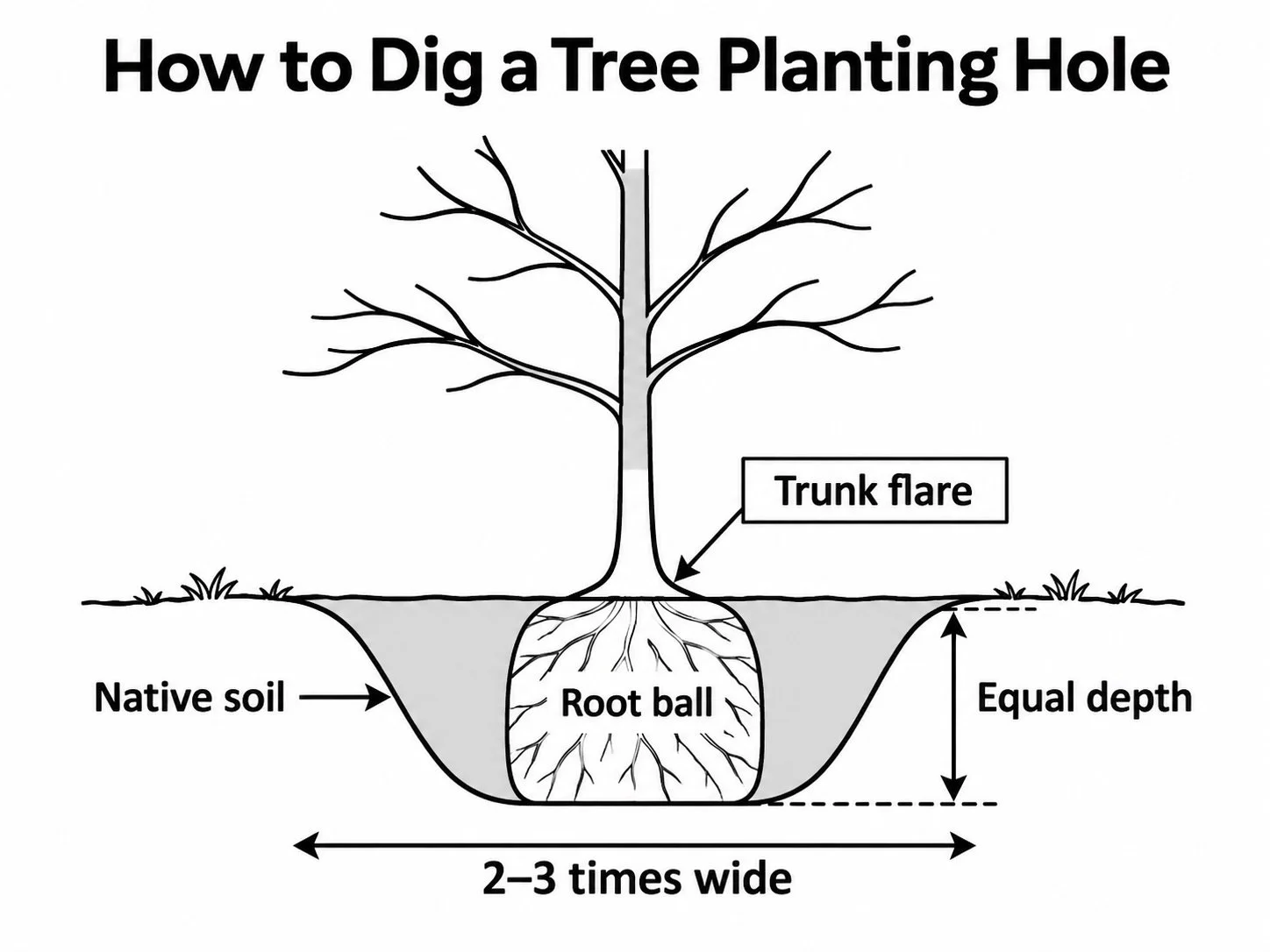
Dig a wide hole around two or three times the root ball’s width and check the depth before refilling.
Refill the hole and water thoroughly
Use the soil you dug out to refill around the root ball. Add it in stages, working it carefully into gaps and firming gently without compacting it into a hard mass.
There is no need to fill the hole with rich compost or add fertiliser at planting time. The roots need to establish in the surrounding soil. Compost buried beneath the root ball can also settle as it breaks down, causing the tree to sink.
Check that the trunk is upright and the flare remains at ground level. Water thoroughly, allowing moisture to soak into the root ball and surrounding soil.
How to mulch a newly planted tree
A useful phrase to remember is “doughnuts, not volcanoes”.
Spread wood chips or chipped bark in a broad ring around the tree, about 5–8cm deep. Leave a clear gap of around 10cm between the mulch and the trunk.
Mulch helps retain moisture and reduce competition from grass and weeds. As it breaks down, it adds organic matter to the soil.
Keep the centre of the ring open. Piling mulch against the trunk can keep the bark damp and encourage decay.
Mulch protects the soil around the roots. Keep it clear of the trunk.
Does a newly planted tree need a stake?
Small, sturdy trees may not need staking. A little flexibility to sway in the wind can help a tree grow stronger, but larger or more top-heavy trees, or those in exposed positions, may need support while their roots establish.
A suitable stake and flexible tie should hold the root ball steady while allowing some movement higher up the trunk.
Remove any nursery canes or tight transport ties, replacing them with appropriate support where needed. Check ties regularly for rubbing or tightening, and remove the support once the tree is securely established.
How to water a newly planted tree
Check soil moisture regularly through the first few growing seasons, particularly in dry or windy weather.
Check both the root ball and the soil beside it, as they can dry out at different rates. A damp surface can hide dry soil underneath. If you’re unsure, carefully check with a trowel near the edge of the root ball.
When watering is needed, apply it slowly and thoroughly so it reaches the roots. A quick splash may only wet the surface.
Avoid adding water to already saturated soil. Roots need air as well as moisture, and persistent waterlogging can damage them.
Using a slow-release tree watering bag or ring
Newly planted trees need regular watering while their roots become established. One option is to use a slow-release watering bag or ring, which helps deliver water gradually rather than all at once.
These reusable devices are filled with water and release it slowly into the soil through small openings, usually over several hours.
There are two common designs:
Watering rings are low, doughnut-shaped containers that sit around the base of a tree.
Watering bags are taller containers that usually fit around the lower trunk or are supported beside the tree.
Both are designed to provide a slow, steady supply of water, making them particularly useful for newly planted trees and community planting projects where regular watering needs to be organised.
They don't remove the need to check soil moisture or water regularly. The amount and frequency of watering will depend on the weather, soil conditions and size of the tree.
During wet periods, remove or store the bag as advised by its manufacturer, especially if its design covers the soil and prevents rainfall from reaching the roots. Check around and beneath it for weeds or damage to the bark.
Always follow the manufacturer's instructions for positioning and filling, and check that water is reaching the root area rather than simply collecting close to the trunk.
Slow-release tree-watering devices: A low-profile watering ring (left) and an upright watering bag (right). Both gradually release water into the soil, helping newly planted trees establish healthy roots. Both still need regular checking and refilling.
Keep caring for your tree
In a shared community space, agree who will look after the tree after it is planted. A shared watering rota that makes sure the tree gets attention all through the year is just as useful as a shared planting day
Keep the base free of competing grass and weeds, maintain the mulch ring and check any stakes, ties or guards. Protect young bark from rabbits where needed, and keep mowers and strimmers away from the trunk.
Planting a tree is the beginning. With a little regular care, it can become a much-loved part of a garden or community - somewhere for wildlife to shelter and for people to enjoy.
For more practical advice, visit the RHS guide to planting trees and shrubs.
If you’d like to get involved with growing locally, explore Marston Community Growing’s upcoming sessions and events.
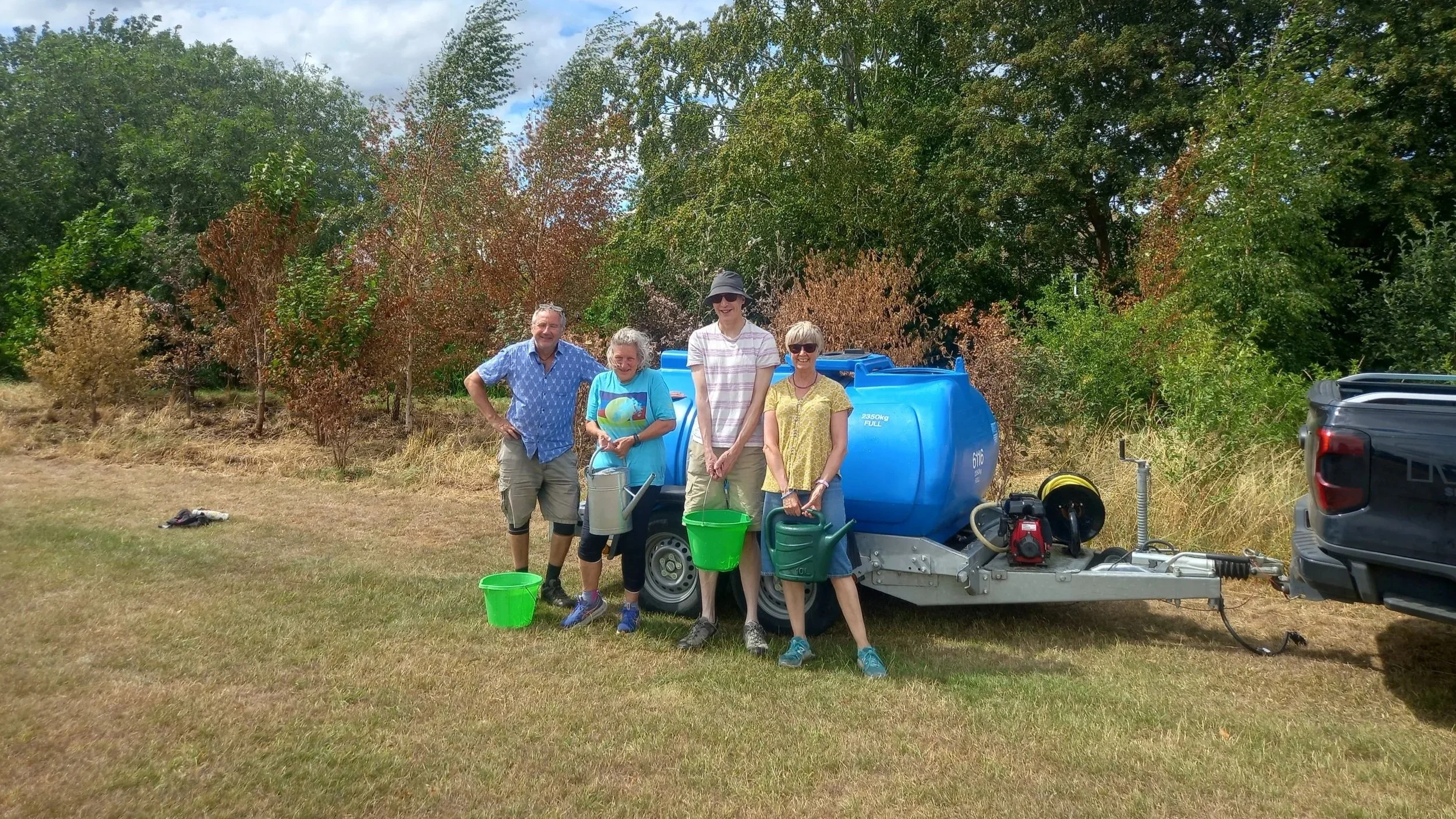
Marston Community Growing volunteers watering trees at the New Marston Rec Community Wood, September 2026.
